By: Dawit Astatike
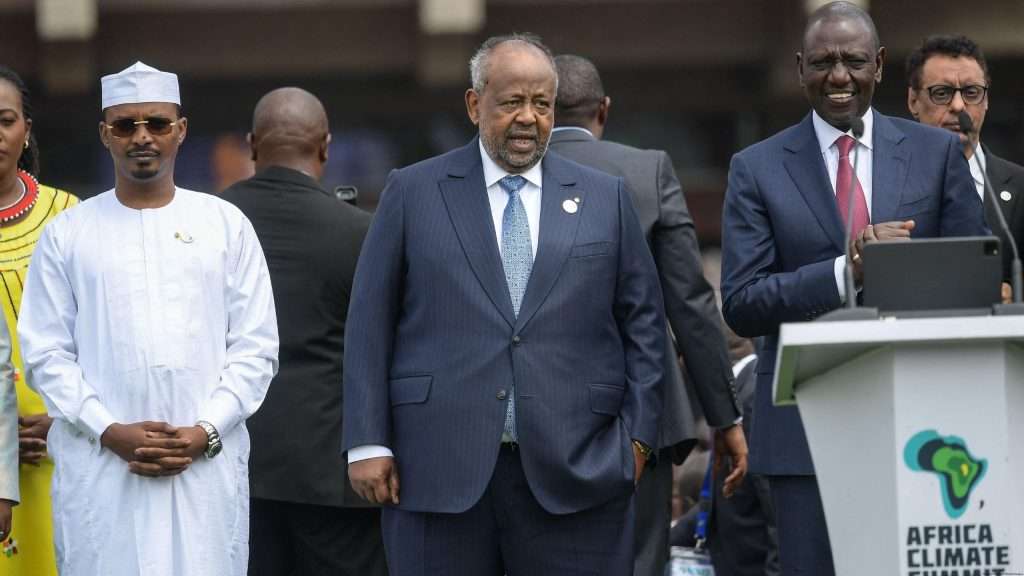
Ethiopia Today (Addis Ababa) April 12,2026: President Ismaël Omar Guelleh has been re-elected for a sixth term in Djibouti, securing a landslide victory with 97.81% of the vote. The official results, released by the Ministry of the Interior on Saturday, confirm Guelleh’s continued grip on power in the Horn of Africa’s smallest but most strategically significant nation.
The election was marked by a familiar pattern of limited competition. Guelleh faced only one challenger, Mohamed Farah Samatar, an independent candidate and former member of the ruling party. Samatar garnered just 2.19% of the vote.
As in previous election cycles, major opposition parties including the Movement for Democratic Renewal and Development (MRD) boycotted the process, dismissing the vote as a “charade” and citing a lack of institutional transparency.
The election took place against a backdrop of heightened regional tension. While a fragile two-week ceasefire between the U.S. and Iran was recently announced, security analysts warn that a collapse of the peace process could place Djibouti in the crosshairs.
Djibouti hosts several foreign military bases, most notably the U.S. base at Camp Lemonnier. Analysts at Deutsche Welle suggest this presence makes the country a potential target if Middle Eastern conflicts expand.
Landlocked Ethiopia, which depends on Djibouti’s ports for over 90% of its trade, watched the process closely. Stability in Djibouti is vital for Ethiopia’s economic survival.
At 78 years old, Guelleh’s candidacy was made possible by a November 2025 constitutional amendment that scrapped the 75-year age limit for presidential candidates. Guelleh has led the country since 1999, succeeding his uncle, the nation’s founding president.
“The president’s re-election suggests a continuation of the status quo,” says Hassan Khannenje, Director of the International Institute for Strategic Studies. “There is no expected change in policy; it is business as usual for the Horn.”
The African Union (AU) and the Intergovernmental Authority on Development (IGAD) both deployed observer missions to monitor the proceedings. The IGAD mission was led by former Ethiopian President Mulatu Teshome.
Despite the lopsided results, election officials described the voting process as peaceful, with a reported voter turnout of approximately 80%. However, critics argue that the lack of a competitive environment continues to stifle political engagement, particularly among Djibouti’s youth.