
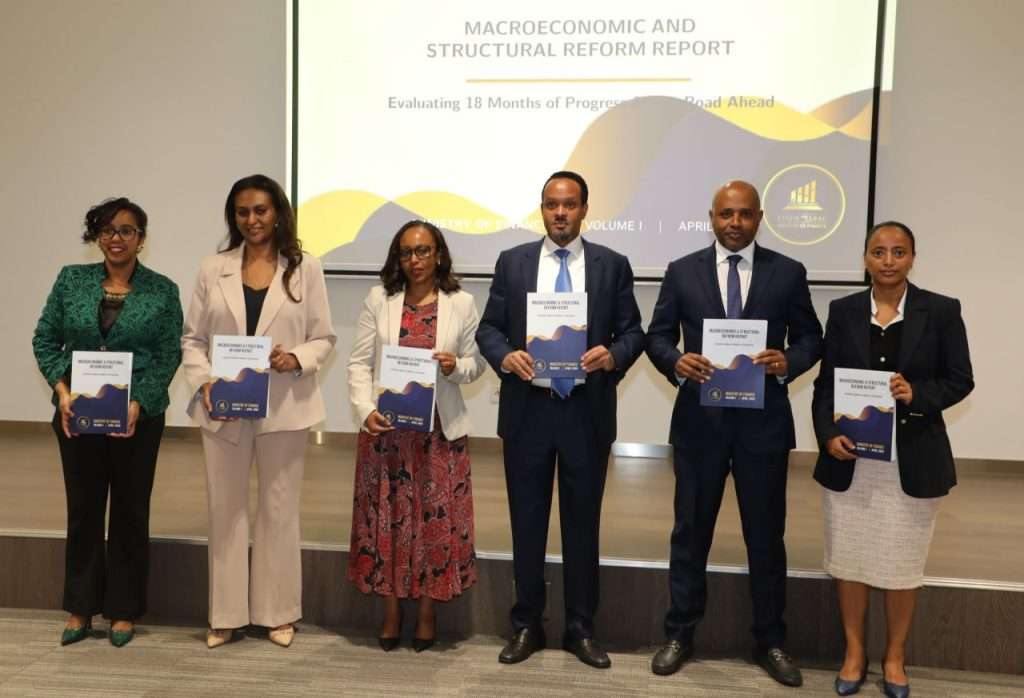
By: Dawit Astatike
Ethiopia Today (Addis Ababa) April 7, 2026 — The Government of Ethiopia has officially launched its comprehensive Macroeconomic and Structural Reform Report, a rigorous, evidence-based analysis documenting 18 months of intensive policy shifts and the tangible gains achieved under the second phase of the Home-Grown Economic Reform (HGER 2.0) program.
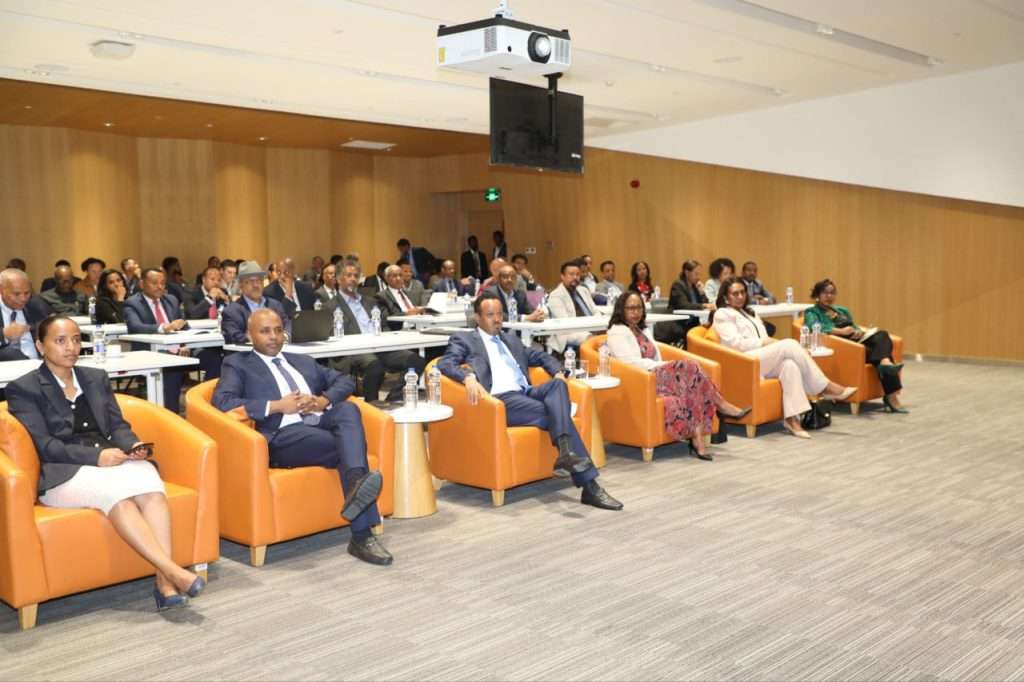
The report, unveiled at a high-level event at the Commercial Bank of Ethiopia, marks a turning point in the nation’s economic transparency. Produced by a collaborative team of domestic economists, the document provides a deep dive into how Ethiopia has navigated global shocks to maintain a resilient trajectory.
Dr. Fitsum Assefa, Minister of Planning and Development, informed stakeholders that Ethiopia has sustained an impressive average annual growth rate of 7.5% over the past eight years. This broad-based expansion has been fueled by synchronized gains across the agriculture, industry, and service sectors.
“The reforms are taking hold, coordination is improving, and the economy is responding,” Dr. Fitsum noted. She further revealed that the government is launching a macroeconomic data exchange system to facilitate real-time indicator sharing, ensuring policy consistency across all public institutions.
A central theme of the report is the government’s commitment to “system-level” stability. Governor of the National Bank of Ethiopia (NBE), Dr. Eyob Tekalign, emphasized that economic stability is no longer treated as a series of isolated interventions but as a result of aligned fiscal and monetary policies.
The July 2024 transition to a market-determined exchange rate has successfully begun correcting long-standing misalignments and boosting export performance.
The shift to an interest-rate-based framework and the total cessation of direct advances from the NBE to the federal budget.
Fiscal Modernization: The digitalization of tax administration, including e-filing and risk-based audits, to enhance domestic revenue mobilization.
Professor Stefan Dercon of the University of Oxford, who supported the analytical work, praised the initiative for its local ownership. He remarked that unlike many nations that implement reforms under external pressure, Ethiopia’s agenda is characterized by a “clear determination” to remain homegrown, a factor he noted significantly increases the program’s international credibility.
Ahmed Shide, Minister of Finance, underscored that the establishment of a high-level macroeconomic coordination platform—supported by international partners and local think tanks—has allowed the government to stay ahead of market risks.
“The reform momentum is real and irreversible,” Minister Ahmed Shide declared. “We are positioning Ethiopia as a competitive, private-sector-led economy that is officially open for business.”



