
By- Our Staff Reporter
Ethiopia Today (Addis Ababa), January 15, 2025: In a decisive move to maintain trade stability across the continent, the United States House of Representatives has approved a three-year extension of the African Growth and Opportunity Act (AGOA).
The legislation, known as H.R. 6500, ensures the survival of the landmark trade program until December 31, 2028, but offers no immediate relief for Ethiopia, which remains excluded from the list of eligible nations.
The bill, which passed with a strong bipartisan vote of 340-54, aims to provide a “bridge” for U.S. companies and African exporters after the program briefly lapsed on September 30, 2025. By extending the current statutory tariff schedule, Congress hopes to prevent a shift in supply chains toward competitors like China and Russia while lawmakers deliberate on long-term reforms.
Despite high-level diplomatic efforts from Addis Ababa, the Office of the U.S. Trade Representative (USTR) confirmed on December 21, 2025, that Ethiopia’s suspension will remain in place for the upcoming fiscal year.
Ethiopia was originally removed from the program in January 2022 following an executive order by President Biden, citing “gross violations of internationally recognized human rights” during the conflict in the Tigray region. While the war has ended, the U.S. annual review process—which evaluates criteria such as the rule of law, political pluralism, and anti-corruption—concluded that Ethiopia does not yet meet the stringent requirements for reinstatement.
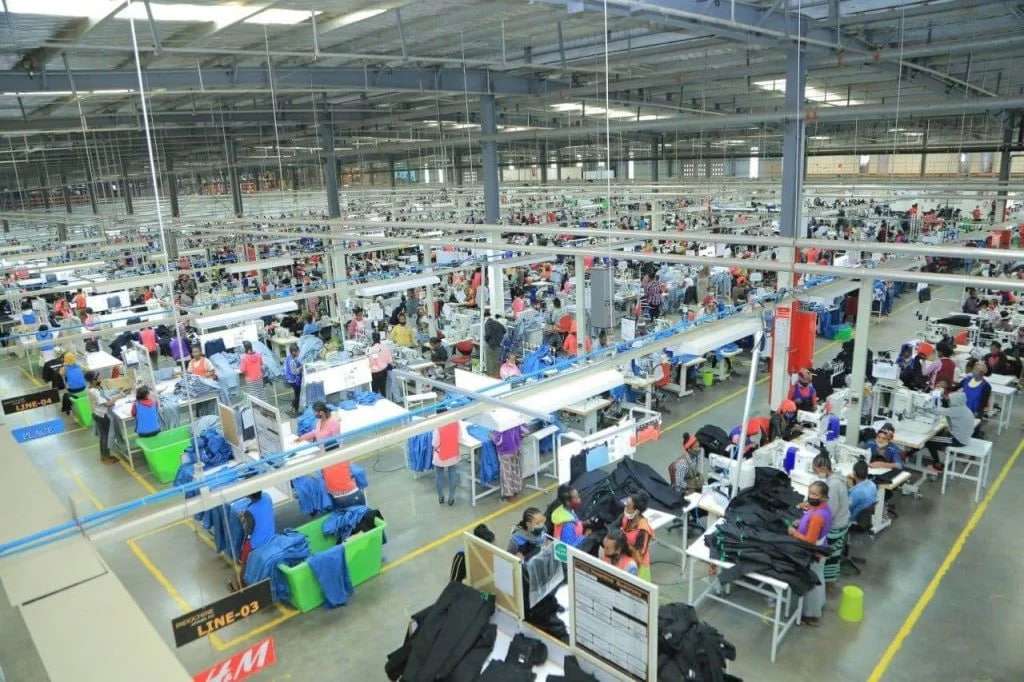
Approximately 11,500 jobs have been lost in industrial parks since the 2022 suspension. At least 18 foreign companies have exited Ethiopia, including major apparel giants like PVH.
In terms of industrial parks, they have faced an estimated $45 million loss in revenue due to the lack of duty-free access to the U.S. market.
The House Committee on Ways & Means emphasized that AGOA is not just a trade tool but a national security priority. With Africa holding nearly 30% of the world’s critical minerals, U.S. lawmakers warned that allowing the program to expire permanently would create a vacuum for other global powers.
“An extended lapse could create a void other powers, including China and Russia, would seek to fill,” the Committee stated, noting that China has already funneled nearly $10 billion into the continent to secure supply chain dominance.
The AGOA Extension Act now moves to the U.S. Senate, where it is expected to face further debate. For Ethiopia, the focus remains on the next annual review cycle. President Taye has continued to urge the U.S. administration to reconsider, arguing that the suspension disproportionately affects the livelihoods of 200,000 low-income families, primarily women who were not involved in the conflict.
The USTR has indicated that while the list of 32 eligible countries remains unchanged for 2025, the door for dialogue remains open should the criteria for human rights and governance be met.



