
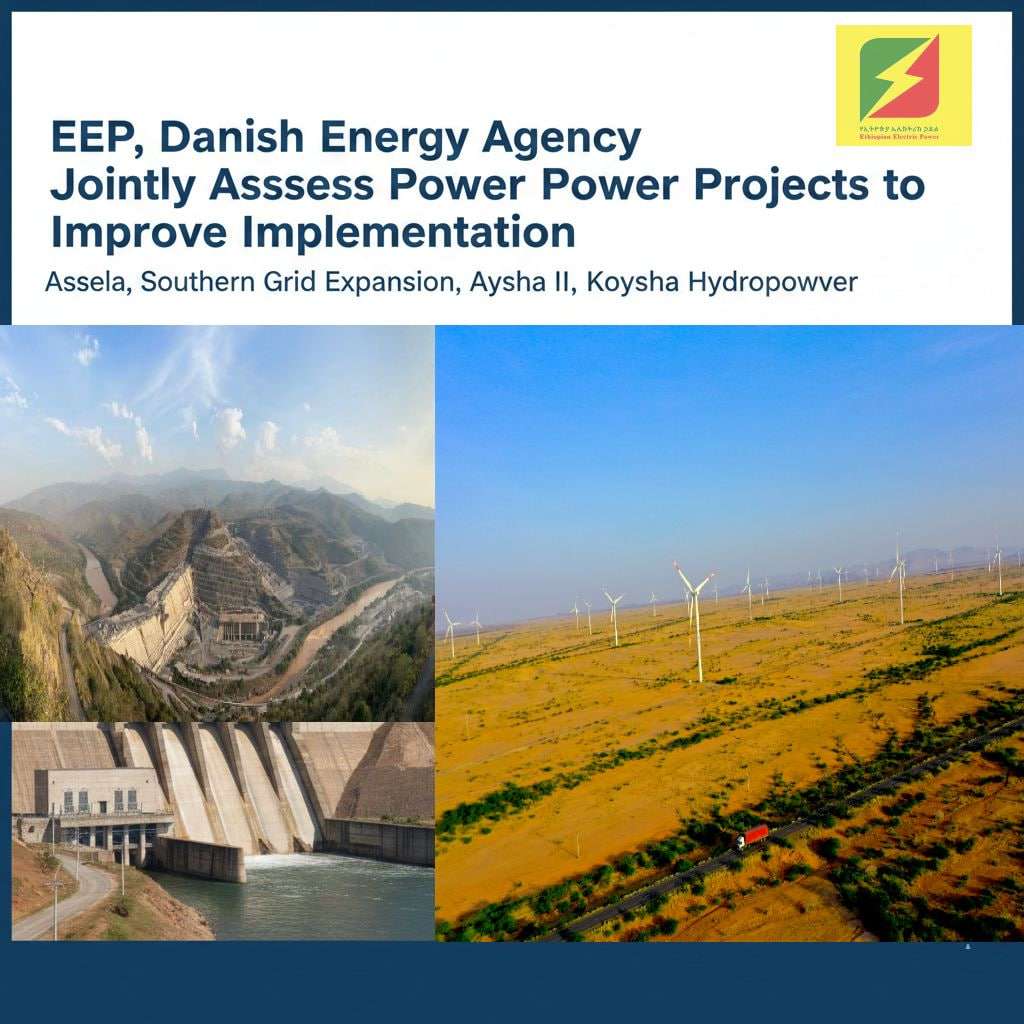
Ethiopia Today(Addis Ababa) December 19,2025:– Ethiopian Electric Power (EEP) and the Danish Energy Agency are jointly conducting an in-depth review of four critical power projects to pinpoint systemic causes of delays and cost overruns. The initiative aims to overhaul implementation strategies and strengthen the utility’s capacity to deliver vital energy infrastructure on time and within budget.
The assessment covers the 𝗔𝘀𝘀𝗲𝗹𝗮, 𝗦𝗼𝘂𝘁𝗵𝗲𝗿𝗻 𝗚𝗿𝗶𝗱 𝗘𝘅𝗽𝗮𝗻𝘀𝗶𝗼𝗻, 𝗔𝘆𝘀𝗵𝗮 𝗜𝗜, 𝗮𝗻𝗱 𝗞𝗼𝘆𝘀𝗵𝗮 𝗛𝘆𝗱𝗿𝗼𝗽𝗼𝘄𝗲𝗿 𝗽𝗿𝗼𝗷𝗲𝗰𝘁𝘀. Initial draft study reports on the Koysha and Aysha II power generation projects were recently presented and discussed in a forum attended by EEP Chief Executive Officer, Engineer Ashebir Balcha.
Ato Tewodros Yosef, Manager of EEP’s Planning, Monitoring and Evaluation Office and Chairperson of the study team, noted that the assessment is being carried out jointly with experts from the Danish Energy Agency and involved a wide range of stakeholders, including contractors, consultants, project staff, local communities, and administrative bodies.
The study examined seven key areas, including institutional knowledge management, contract preparation, inter-departmental coordination, corporate social responsibility implementation, stakeholder relationships, monitoring and evaluation systems, and project implementation planning.
The draft report identified gaps such as weak documentation and transfer of lessons learned, unclear contract documents, limited internal evaluations, poor coordination and communication, and the absence of clear social responsibility plans. The presentation aimed to gather stakeholder feedback to improve procedures and strengthen EEP’s monitoring and evaluation capacity.
Mr. Peter Høyer, Senior Advisor at the Danish Energy Agency, highlighted Denmark’s use of structured systems for documenting lessons learned and a “Stage Gate” model that supports informed decision-making and effective project oversight. He said these practices are being shared with EEP, along with benchmarking and pilot applications.
Dr. Dereje Fente emphasized the importance of expanding lessons learned across projects and strengthening community participation and social responsibility efforts.
Concluding the discussion, Engineer Ashebir Balcha acknowledged ongoing challenges in completing projects within planned timelines and budgets despite significant investments. He stated that the study would be a key input for improving future project performance and directed teams to strengthen knowledge management, reporting systems, decision-oriented project information systems, and monitoring and evaluation frameworks. He also called for broader stakeholder engagement and inclusion of self-financed projects in the assessment.



