By- Our Staff Writer
Addis Ababa (Ethiopia Today) Addis Ababa, December 5, 2024 Ethiopia’s Bio and Emerging Technology Institute (BETin) announced that it is implementing five projects to advance traditional herbal medicine, mineral development, and agricultural activities.
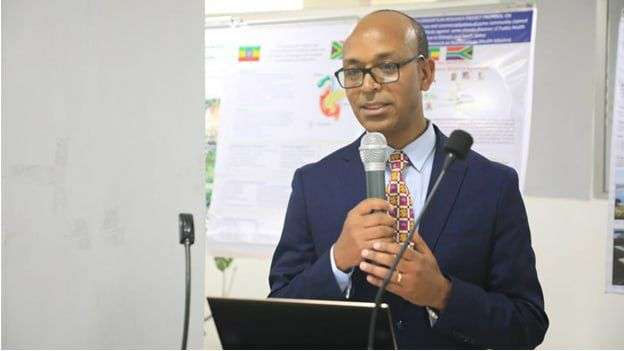
The BETin Director General, Prof. Kassahun Tesfaye, told EPA that a plan of action has been designed focusing on managing soil acidity, energy, bioscience, pesticides, and other research areas in agriculture and health sectors, thereby substituting imports.
Accordingly, the Director General stated that experts and researchers are working on preliminary activities and collecting laboratory data on insecticide, traditional herbal medicine, bio and emerging technology and soil fertility.
Kassahun added that the institute, having biotechnology and emerging technology centers, is implementing indigenous and scientific knowledge to produce medicines, soil fertilizers and soaps locally.
In this regard, he expressed that the country is striving to manufacture different chemicals from leaves or roots of various herbs to make pesticides, and other chemicals to control bacterial diseases that attack mango fruits and vegetable species.
“We are making significant progresses and very practical projects, potentials for new research breakthrough and commercialization by building strong technology, innovation, capacity building, and training facilities,” he said.
Such research projects will transform into commercialization, thereby translating the bio economy strategy into wealth and entrepreneurship through employing knowledge, Kassahun stated.
“To achieve this, we are also working in collaboration with South Africa in knowledge exchange through which a plan of action is prepared to make the project effective” he said, mentioning that an agreement has been signed by the representatives of the two countries to start the project.
Moreover, he noted that Ethiopia and South Africa are also working together in advancing technologies and researches with a strong ambition, in which, such collaboration can be expanded into BRICS countries in the future to control emerging and recurrent infectious diseases in Ethiopia and other member states.