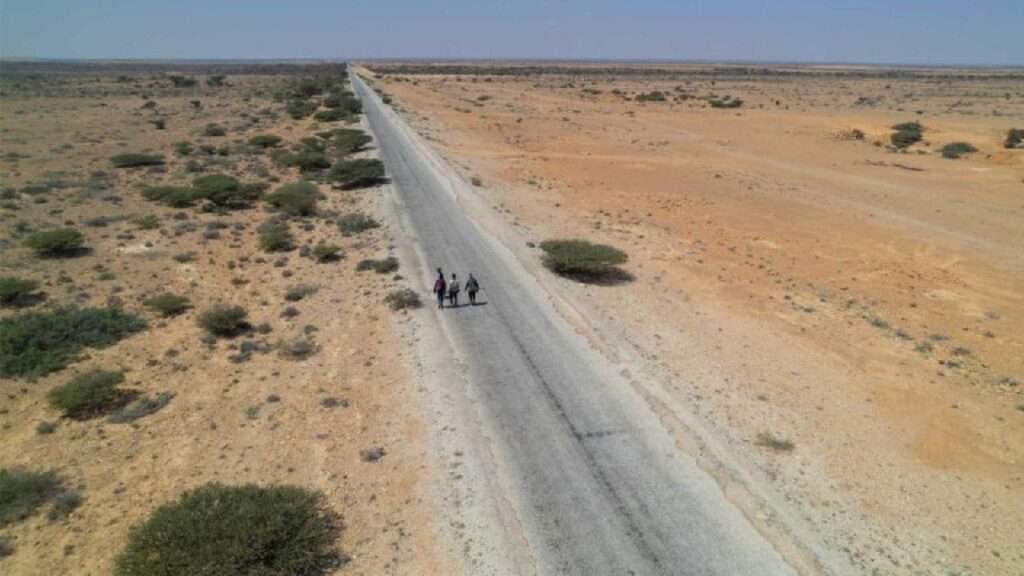
Addis Ababa (Ethiopia Today), April 1, 2023: Ethiopian migrants were killed in a car accident this week in Bosaso, Somalia, while being transported by smugglers; at least 20 others have been injured in the deadly accident that occurred in the evening of Tuesday, March 28.
According to the International Organization for Migration (IOM), the victims were reportedly heading to Bosaso, hoping to cross into “the Gulf of Aden to Yemen.“
Local communities brought the corpses and seriously injured migrants to Bosaso General Hospital, which is said to be treating patients beyond its capacity, says the IOM.
IOM has mobilized available resources to support the hospital in providing treatment to the victims.
“We sent most of the medical supplies we had in stock to the Migrant Response Center (MRC) in Bosaso, and our teams are providing physiological support to those injured,” said Frantz Celestin, IOM Somalia’s Chief of Mission.
The IOM’s Missing Migrants Project, including this latest incident, has documented the deaths and disappearances of more than 1,100 people traveling from Eastern Africa to Yemen and Saudi Arabia on the “Eastern Route” since 2019.
Although more than 50,000 persons have been reported missing by families after leaving their home country since 2015 alone, the number of confirmed deaths given by IOM is almost probably an underestimate, said the IOM. Yet, due to security and financial issues, many deaths go unreported.
The eastern route, which is mostly used by Ethiopians and Somalis fleeing unstable economic conditions, violence, and climatic catastrophes like the present drought, is the main migration route out of the Horn of Africa via Somalia or Djibouti to Yemen and frequently further to Saudi Arabia.
Migrants taking the Eastern Route face serious risks, including extortion, detention, kidnapping, modern slavery, and physical abuse. Rape, deaths, and killings at the hands of smugglers and at times by authorities are also a reality in what is arguably considered one of the most dangerous migratory routes on earth.
“IOM calls for safer and more legal pathways for people in the Horn of Africa to migrate regularly. Populations have suffered from decades of shocks and need more options to sustain their livelihoods and access opportunities,” said Celestin.
Despite these dangers, the number of migrants taking the Eastern Route is on the rise. IOM recorded 21,469 migrants entering Yemen between January and February of this year, compared to 14,298 entrances in the same period last year. An estimated 27 percent of them traveled through or from Somalia.
IOM said it is facing significant funding gaps to assist migrants in Somalia. By June 2023, the organization will be compelled to stop funding two Migrant Response Centers unless donors significantly increase their contributions. This will leave thousands of migrants annually without access to basic healthcare, information, clothing, water, food, temporary housing, and a humane, safe, and dignified option for returning home voluntarily.
In February 2022, IOM launched a 84 million USD appeal to support over 1 million migrants in the Horn of Africa.
According to the IOM, in June 2022 alone, more than 500 Ethiopian migrants who were stranded in Malawi were seeking to return to their communities of origin.
Credit: AS